
Fortune Bestowing Fame
1401 to 1500
Medium
bronze//Dark brown patina
Dimensions
overall (diameter): 8.83 cm (3 1/2 in.) gross weight: 238.06 gr (0.525 lb.)
Classification
Sculpture
Department
CSD
Museum
National Gallery of Art, Washington, D.C.
Credit
Samuel H. Kress Collection
Accession Number
1957.14.180
Rights
Public Domain
Art Historical Context
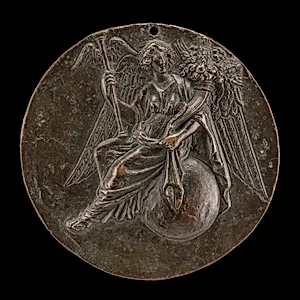
**Fortune Bestowing** Attributed to the Sienese and goldsmith Cristoforo di Geremia, this intimate bronze plaquette dates to the 15th (1401–1500) and exemplifies the Renaissance revival of classical allegory in small-scale sculpture. Measuring just 3½ inches (8.83 cm) in diameter and weighing a substantial 238 grams, it fits neatly in the palm, inviting close contemplation. The dark brown patina enhances its aged elegance, a natural result of bronze's oxidation over centuries. The artwork personifies Fortune—the capricious goddess often shown with her wheel—bestowing the rewards of fame, likely symbolized by laurels or a triumphant figure. This reflects quattrocento Italy's humanist interests, blending medieval moral tales with emerging ideals of personal glory and destiny. Geremia, active in Siena's vibrant artistic circle, mastered the lost-wax casting technique, enabling crisp details in relief on such a modest scale. Plaquette like this were prized as collector's items or devotional objects, bridging jewelry and fine art. Housed in the National Gallery of Art's Samuel H. Kress Collection, it highlights the era's technical innovation and cultural fascination with fortune's favor. A tiny portal to Renaissance thought, it reminds us how even small bronzes carried profound aspirations.