
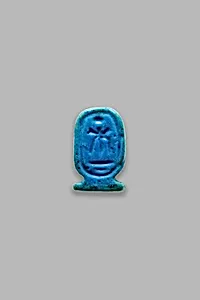
Foundation Deposit Plaque
Unknown Artist
ca. 1153–1147 B.C.
Medium
Faience
Dimensions
H. 2.4 cm (15/16 in.)
Classification
Foundation Deposit Plaque
Period
New Kingdom, Ramesside
Department
Egyptian Art
Museum
Metropolitan Museum of Art, New York, NY
Credit
Rogers Fund, 1935
Accession Number
35.3.167
Rights
Public Domain
Art Historical Context
Welcome to the Egyptian Art galleries at the Metropolitan Museum of Art where we encounter the "Foundation Deposit Plaque," tiny yet powerful artifact from the New Kingdom Ramesside period (ca. 1153–1147 B.C.), during Dynasty 19. These plaques were ritual objects buried in the foundations of temples and palaces as sacred offerings. Placed at building corners, they invoked divine protection and prosperity, ensuring the structure's stability under the gods' watchful eyes. Crafted by an unknown artist, this plaque reflects the era's deep religious devotion amid Egypt's imperial height. Made of faience—a prestigious glazed ceramic of crushed quartz, lime, and copper for its vibrant turquoise hue—this 2.4 cm (15/16 in.) plaque exemplifies ancient Egyptian mastery of small-scale artistry. Faience mimicked costly lapis lazuli, making divine symbols accessible in rituals. Its incised inscriptions likely named the pharaoh and deities, a common feature blending text and image to eternalize royal piety. Acquired through the Rogers Fund in 1935, this plaque offers a glimpse into Ramesside builders' worldview, where even hidden deposits bridged earthly and divine realms. A testament to enduring faith, it reminds us how ancient Egyptians wove spirituality into every stone.