
Fragment
Unknown Artist
17th century
Medium
Bobbin lace
Dimensions
L. 11 x W. 2 1/4 inches (27.9 x 5.7 cm)
Classification
Textiles-Laces
Culture
Dutch
Department
European Sculpture and Decorative Arts
Museum
Metropolitan Museum of Art, New York, NY
Credit
Gift of Margaret Taylor Johnstone, 1906
Accession Number
06.519
Rights
Public Domain
Art Historical Context
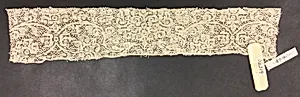
This delicate fragment of bobbin lace, crafted in the Netherlands during the 17th, offers a glimpse into the opulent world of Dutch Golden Age textiles. Measuring just 11 by 2¼ inches (27.9 x 5.7 cm), this narrow strip exemplifies the exquisite craftsmanship of the era, when lace became a hallmark of wealth and status. Adorning collars, cuffs, and trims on elite clothing, such pieces were prized possessions, reflecting the booming trade and artistic innovation in Flemish and Dutch lace centers like Brussels and Mechlin. Bobbin lace, the medium here, is a labor-intensive technique where threads are twisted and plaited around pins on a pillow using small bobbins—wooden spools that allow for complex patterns. Unlike needle lace, bobbin lace produces a sturdy, geometric structure ideal for intricate motifs, often floral or geometric, though this fragment's precise design invites close inspection. Its survival as a standalone piece underscores the fragility and value of these handmade luxuries, preserved today in The Metropolitan Museum of Art's European Sculpture and Decorative Arts collection through a 1906 gift from Margaret Taylor Johnstone. In a time when the Dutch Republic led Europe in commerce and culture, this lace fragment symbolizes technical mastery and cultural refinement, reminding us how everyday adornments embodied artistic excellence.