
Fragment
Unknown Artist
17th century
Medium
Bobbin lace
Dimensions
L. 14 x W. 4 inches (35.6 x 10.2 cm)
Classification
Textiles-Laces
Culture
Flemish, Bruges
Department
European Sculpture and Decorative Arts
Museum
Metropolitan Museum of Art, New York, NY
Credit
The Nuttall Collection, Gift of Mrs. Magdalena Nuttall, 1908
Accession Number
08.180.116
Rights
Public Domain
Tags
Art Historical Context
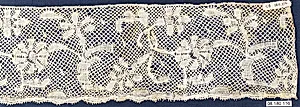
This delicate *Fragment* of bobbin lace hails from 17th-century Bruges, a Flemish hub renowned for its exquisite lace production during the region's Golden Age. Crafted by an unknown artist, this narrow strip measures 14 by 4 inches and showcases intricate floral motifs, a hallmark of Flemish lace design that evoked the natural beauty of gardens in an era when lace was a luxury symbol of wealth and refinement. Bruges lacemakers supplied Europe's elite, adorning collars, cuffs, and altar cloths with their fine work. Bobbin lace, the medium here, involves deftly twisting and intertwining threads held on handheld bobbins over a patterned pillow, allowing for complex, airy patterns impossible with needle lace. This technique's precision highlights the anonymous artisans' skill—often women in guild workshops—producing pieces that were both functional textiles and wearable art. The floral elements, rendered in fine linen threads, reflect Baroque-era tastes for elaborate ornamentation. A gift from Mrs. Magdalena Nuttall's collection in 1908, this fragment now graces the Metropolitan Museum of Art's European Sculpture and Decorative Arts department. Though incomplete, it invites visitors to marvel at the enduring fragility of Flemish craftsmanship, a testament to Bruges' cultural legacy.