
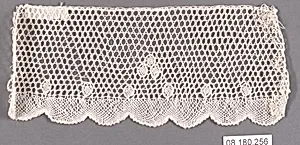
Fragment
Unknown Artist
18th century
Medium
Bobbin lace
Dimensions
L. 6 1/4 x W. 2 1/2 inches (15.9 x 6.4 cm)
Classification
Textiles-Laces
Culture
French
Department
European Sculpture and Decorative Arts
Museum
Metropolitan Museum of Art, New York, NY
Credit
The Nuttall Collection, Gift of Mrs. Magdalena Nuttall, 1908
Accession Number
08.180.256
Rights
Public Domain
Art Historical Context
This delicate fragment of bobbin lace, crafted in 18th-century France, exemplifies the exquisite artistry of European textile traditions. Measuring just 6¼ x 2½ inches, it likely served as a trim for luxurious garments, such as cuffs, collars, or ecclesiastical vestments, during an era when lace was a symbol of wealth and refinement. Produced anonymously by skilled lacemakers, it entered the Metropolitan Museum of Art's collection in 1908 as part of The Nuttall Collection, gifted by Mrs. Magdalena Nuttall, and resides in the European Sculpture and Decorative Arts department. Bobbin lace, the medium here, involves weaving fine threads with multiple bobbins over a patterned pillow, creating intricate motifs through precise knotting and braiding. In 18th-century France, this technique reached new heights of complexity, rivaling needle lace in finesse and often featuring floral or geometric designs that showcased technical virtuosity. Though only a fragment survives, it whispers of the labor-intensive process—sometimes taking months for larger pieces—and the cultural prestige of French lacemaking centers like Alençon and Valenciennes. Today, this small treasure highlights the unsung mastery of anonymous artisans, preserving a slice of Rococo-era opulence. Visitors can appreciate how such textiles adorned the elite, bridging fashion, craft, and history in the Met's vast holdings.