
Fragment
Unknown Artist
18th century
Medium
Needle lace, point d’Alençon
Dimensions
L. 10 x W. 3 1/4 inches 25.4 x 8.3 cm
Classification
Textiles-Laces
Culture
French
Department
European Sculpture and Decorative Arts
Museum
Metropolitan Museum of Art, New York, NY
Credit
The Nuttall Collection, Gift of Mrs. Magdalena Nuttall, 1908
Accession Number
08.180.282
Rights
Public Domain
Art Historical Context
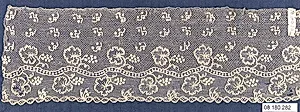
This delicate fragment of needle lace, crafted in the renowned point d’Alençon technique the 18th century exemplifies the pinnacle of French lace-making artistry. Measuring just 10 by 3¼ inches (25.4 x 8.3 cm), it originated as part of a larger decorative element, such as a cuff, flounce, or ecclesiastical trimming. Produced in Alençon, Normandy—a center of lace excellence since the 17th century piece reflects the era’s opulent textile traditions, where lace adorned the garments of royalty and nobility. Point d’Alençon, often called the “queen of laces,” is made entirely by hand using a needle and single thread, employing intricate buttonhole stitches to create a fine mesh ground and raised, sculptural motifs. Unlike bobbin laces, its needlework allowed for unprecedented detail and realism, mimicking embroidery or even painting in thread. In 18th-century France, under Louis XV and XVI, lace production was state-regulated through royal workshops, ensuring quality and prestige; it symbolized wealth and refinement amid the lavish fashions of the Ancien Régime. Housed in the Metropolitan Museum of Art’s Department of European Sculpture and Decorative Arts, this fragment from The Nuttall Collection—gifted by Mrs. Magdalena Nuttall in 1908—offers a tangible glimpse into Versailles-era elegance. Though incomplete, its preservation highlights the fragility and enduring allure of these masterful textiles.