
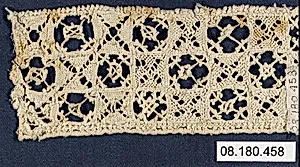
Fragment
Unknown Artist
17th century
Medium
Needle lace
Dimensions
L. 4 1/2 x W. 2 inches (11.4 x 5.1 cm)
Classification
Textiles-Laces
Culture
Italian
Department
European Sculpture and Decorative Arts
Museum
Metropolitan Museum of Art, New York, NY
Credit
The Nuttall Collection, Gift of Mrs. Magdalena Nuttall, 1908
Accession Number
08.180.458
Rights
Public Domain
Art Historical Context
This delicate *Fragment* of needle lace, crafted by an unknown Italian artist in the 17th century offers a glimpse into the opulent world of Baroque-era textiles. Measuring just 4½ x 2 inches (11.4 x 5.1 cm), this tiny survivor from The Nuttall Collection—generously gifted to the Metropolitan Museum of Art 1908—likely once adorned a garment collar, cuff, or ecclesiastical vestment. Italian lace, particularly from Venice, was renowned across Europe as a symbol of wealth and refinement during this period. Needle lace, or *punto in aria* ("point in air"), represents the pinnacle of handcraftsmanship. Artisans meticulously stitched fine linen threads with a needle, building intricate motifs freehand without a woven ground, often following paper patterns that were later removed. This labor-intensive technique allowed for fluid, sculptural designs—floral scrolls, geometric patterns, or figural scenes—that showcased virtuosic skill and could take months to complete. As a fragment, it highlights the fragility of these treasures, many lost to time or wear. Yet its preservation underscores Italy's cultural dominance in decorative arts, where lace rivaled painting in prestige. Visitors, imagine the flicker of candlelight on such finery at a grand banquet— a testament to artistry woven from patience and thread.