
Fragment
Unknown Artist
17th century
Medium
Silk on linen
Dimensions
L. 8 1/2 x W. 8 3/4 inches (21.6 x 22.2 cm)
Classification
Textiles-Embroidered
Culture
Italian
Department
European Sculpture and Decorative Arts
Museum
Metropolitan Museum of Art, New York, NY
Credit
Rogers Fund, 1909
Accession Number
09.50.1372
Rights
Public Domain
Art Historical Context
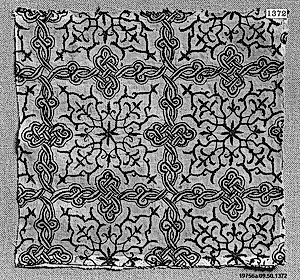
This delicate *Fragment*, a 17th-century Italian textile, showcases the exquisite craftsmanship of Baroque-era Europe. Crafted with silk threads on a linen, it measures just 8½ by 8¾ inches, hinting at its origin as part of a larger luxury item—perhaps a garment, ecclesiastical vestment, or opulent household furnishing. Acquired through the Rogers Fund in 1909 and now housed in the Metropolitan Museum Art's Department of European Sculpture and Decor Arts, this small survivor exemplifies the technical mastery of Italian needleworkers. In 17th-century Italy, embroidery was a revered art form, blending artistry with status. Silk-on-linen techniques allowed for vibrant colors and fine detail, often featuring intricate patterns that reflected the era's fascination with natural motifs and elaborate ornamentation. Such textiles were prized in courts, churches, and wealthy homes, symbolizing piety, prosperity, and cultural refinement amid the Counter-Reformation's emphasis on visual splendor. Today, this fragment invites us to appreciate the anonymous hands behind Italy's textile legacy. Its preservation highlights how everyday luxuries endure as windows into history, reminding visitors of the skilled artisans whose work adorned the lives of Renaissance descendants.