
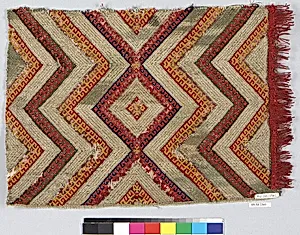
Fragment
Unknown Artist
early 19th century
Medium
Wool and metal thread on canvas
Dimensions
L. 11 1/4 x W. 15 1/2 inches (28.6 x 39.4 cm)
Classification
Textiles-Embroidered
Culture
Romanian, Banat district
Department
European Sculpture and Decorative Arts
Museum
Metropolitan Museum of Art, New York, NY
Credit
Rogers Fund, 1909
Accession Number
09.50.1561
Rights
Public Domain
Art Historical Context
This delicate embroidered fragment, originating from Romania's Banat district in early 19th century offers a glimpse into the rich textile traditions of Eastern Europe. Crafted by an unknown artist using wool and shimmering metal threads on canvas, it measures just 11¼ by 15½ inches, suggesting it is a surviving piece from a larger garment, household furnishing, or ceremonial object. Acquired by The Metropolitan Museum of Art through the Rogers Fund in 1909, it resides in the European Sculpture and Decorative Arts department, classified among embroidered textiles. The use of metal threads alongside wool highlights sophisticated techniques typical of regional folk embroidery, where artisans combined durability with ornamental luxury. In the Banat—a multi-ethnic borderland influenced by Ottoman, Habsburg, and local Romanian cultures—these textiles often featured intricate patterns symbolizing prosperity, nature, or protection. Though incomplete, this fragment preserves the meticulous stitching and textural contrast that made such works prized for both everyday use and special occasions. Today, it invites visitors to appreciate the anonymous skill of rural craftspeople, whose handiwork bridged utility and artistry in a pre-industrial era. A testament to Romania's vibrant heritage, it underscores how textiles served as cultural storytellers in 19th-century Europe.