
Fragment
Unknown Artist
18th–19th century
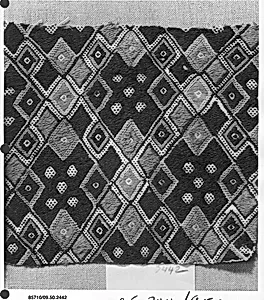
Medium
Wool on canvas
Dimensions
L. 9 x W. 7 3/4 inches (22.9 x 19.7 cm)
Classification
Textiles-Embroidered
Culture
Albanian or Montenegrin
Department
European Sculpture and Decorative Arts
Museum
Metropolitan Museum of Art, New York, NY
Credit
Rogers Fund, 1909
Accession Number
09.50.2442
Rights
Public Domain
Art Historical Context
This delicate embroidered fragment, crafted from wool on canvas in the 18th–19th century, offers a glimpse into the rich textile traditions of Albanian or Montenegrin culture. Measuring just 9 by 7¾ inches, it survives as a small remnant—likely from a larger garment, household textile, or ceremonial cloth—preserved in The Metropolitan Museum of Art's European Sculpture and Decorative Arts collection. Acquired through the Rogers Fund in 1909, it reflects the enduring folk artistry of the Balkan region during a time of Ottoman influence and emerging national identities. Embroiderers in this area were renowned for their meticulous counted-thread techniques, such as cross-stitch, using vibrant wool yarns to create intricate patterns on sturdy canvas grounds. These designs often featured geometric motifs, florals, or symbolic elements that conveyed cultural pride, family heritage, and social status, especially among rural communities where textiles formed a vital part of dowries and rituals. Though the exact imagery here is fragmented, it exemplifies the technical precision and bold colorwork that distinguished Balkan embroidery from finer European laces or silks. As a testament to anonymous craftsmanship, this piece highlights how everyday artisans contributed to Europe's decorative arts heritage, bridging utilitarian function with aesthetic beauty. Visitors can appreciate its tactile warmth and historical resilience up close.