
Fragment
Unknown Artist
19th century
Medium
Silk and wool, beads
Dimensions
L. 5 1/2 x W. 33 1/2 inches (14 x 85.1 cm)
Classification
Textiles-Embroidered
Culture
German
Department
European Sculpture and Decorative Arts
Museum
Metropolitan Museum of Art, New York, NY
Credit
Rogers Fund, 1909
Accession Number
09.50.2774
Rights
Public Domain
Tags
Art Historical Context
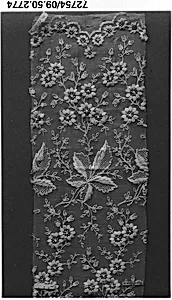
This delicate embroidered fragment, created by an unknown German artist in the 19th century, showcases the exquisite craftsmanship of European textile arts. Measuring just 5½ by 33½ inches, it features intricate motifs of flowers and leaves rendered in silk and wool threads, accented with shimmering beads. Housed in the Metropolitan Museum of Art's Department of European Sculpture and Decor Arts (acquired through the Rogers Fund in 1909), this slender panel exemplifies the period's love for naturalistic floral designs, which adorned everything from garments to household linens. In 19th-century Germany, embroidery was a revered domestic and artistic pursuit, often practiced by women in bourgeois homes or workshops. The combination of silk for its luster, wool for texture, and beads for dimensionality highlights advanced needlework techniques, creating a tactile, jewel-like surface. Such fragments preserve fleeting glimpses of everyday elegance, revealing the skill and patience required to evoke nature's abundance in thread. Though incomplete, this piece offers a window into German cultural heritage, where floral embroidery symbolized prosperity and beauty amid industrialization. Visitors will appreciate its intimate scale and vibrant details, a testament to the enduring allure of handcrafted textiles.