
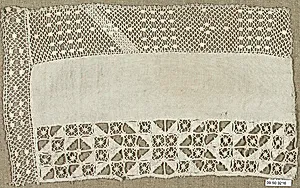
Fragment
Unknown Artist
17th century
Medium
Cutwork
Dimensions
L. 14 x W. 8 inches 35.6 x 20.3 cm
Classification
Textiles-Laces
Culture
German
Department
European Sculpture and Decorative Arts
Museum
Metropolitan Museum of Art, New York, NY
Credit
Rogers Fund, 1909
Accession Number
09.50.3216
Rights
Public Domain
Art Historical Context
This delicate *Fragment* from 17th-century Germany exemplifies the exquisite artistry of cutwork, a lace-making technique where threads are meticulously cut from fine linen fabric and secured with intricate embroidery stitches. Measuring just 14 by 8 inches (35.6 x 20.3 cm), this surviving piece—now housed in the Metropolitan Museum of Art European Sculpture and Decorative Department—was acquired through the Rogers Fund in 190. Its classification as a textile lace highlights the era's mastery in transforming everyday cloth into ornamental marvels. In the Baroque age, German cutwork flourished as a symbol of wealth and craftsmanship, often adorning elite garments like ruffs, cuffs, and altar linens. Artisans employed precise needlework to create openwork patterns resembling delicate filigree, blending functionality with opulence. Though the artist remains unknown, such fragments reveal the labor-intensive skill of regional lacemakers, who rivaled Italian and Flemish counterparts in innovation. Today, this modest remnant invites us to appreciate the fleeting beauty of historical textiles—ephemeral treasures that once graced royal courts and pious altars, now preserved as windows into 17th-century European elegance.