
Fragment
Unknown Artist
19th century
Medium
Silk
Classification
Textiles-Woven
Culture
possibly French
Department
European Sculpture and Decorative Arts
Museum
Metropolitan Museum of Art, New York, NY
Credit
Bequest of Maria P. James, 1911
Accession Number
11.60.412
Rights
Public Domain
Tags
Art Historical Context
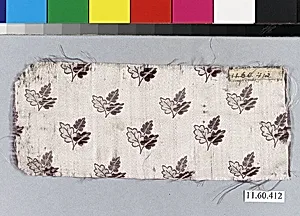
This exquisite silk fragment, dating to the 19th and possibly of French origin, offers a glimpse into the refined world of European textile artistry. Housed in the Metropolitan Museum of Art's Department of European Sculpture and Decor Arts, it is classified as a woven textile featuring a delicate motif of leaves. Acquired through the bequest of Maria P. James in1911, this small survivor showcases the luxurious sheen and intricate patterning typical of high-quality silk production during an era when such fabrics adorned fashionable garments, furnishings, and ecclesiastical vestments. In 19th-century Europe, particularly in France's renowned silk centers like Lyon, weaving techniques reached new heights of sophistication, often employing Jacquard looms to create complex, repeatable designs. The leaf pattern here evokes nature's elegance, a popular motif symbolizing renewal and abundance in decorative arts. Though only a fragment remains, it preserves evidence of masterful craftsmanship—fine threads interlaced with precision to produce vibrant color and texture that would have caught the light beautifully. As visitors, pause to admire how this humble piece reflects broader cultural values: the fusion of artistry and industry that made silk a status symbol. Its survival underscores the museum's role in safeguarding ephemeral treasures, inviting us to imagine the opulent settings it once graced.