
Fragment
Unknown Artist
1770–85
Medium
Silk
Classification
Textiles-Woven
Culture
French
Department
European Sculpture and Decorative Arts
Museum
Metropolitan Museum of Art, New York, NY
Credit
Rogers Fund, 1919
Accession Number
19.163.25
Rights
Public Domain
Tags
Art Historical Context
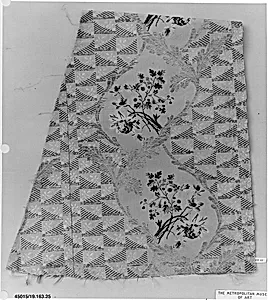
This exquisite silk fragment, woven in France between 1770 and 1785, captures the lavish floral motifs—blooming flowers and delicate leaves—that defined late Rococo decorative arts. Produced during the final flourish of the Ancien Régime, just before the French Revolution, such textiles were masterpieces of luxury craftsmanship, often adorning gowns, furnishings, or wall hangings for the elite. The unknown artist's design showcases the intricate weave typical of French silk production, likely from the renowned looms of Lyon, where drawloom techniques allowed for vibrant, repeating patterns in shimmering silk threads. As a woven textile in The Metropolitan Museum of Art's European Sculpture and Decorative Arts collection, this fragment highlights silk's pivotal role in 18th-century European culture. Silk was a symbol of wealth and refinement, exported worldwide and fueling France's textile industry. Acquired through the Rogers Fund in 1919, it preserves a snippet of opulent domestic life, inviting us to imagine the grand salons where such fabrics once dazzled. Though incomplete, its preserved beauty reveals the era's passion for nature-inspired elegance, blending artistry with technical virtuosity.