
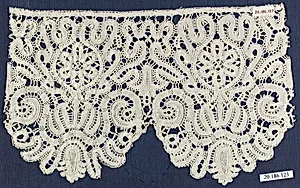
Fragment
Unknown Artist
17th century
Medium
Bobbin lace
Dimensions
L. 9 1/4 x W. 6 inches (23.5 x 15.2 cm)
Classification
Textiles-Laces
Culture
Italian, Genoa
Department
European Sculpture and Decorative Arts
Museum
Metropolitan Museum of Art, New York, NY
Credit
Rogers Fund, 1920
Accession Number
20.186.123
Rights
Public Domain
Art Historical Context
This delicate *Fragment* of bobbin lace, crafted by an unknown artist in 17th-century Genoa, Italy, exemplifies the pinnacle of Renaissance-era textile artistry. Measuring just 9¼ by 6 inches (23.5 x 15.2 cm), this surviving piece from the Metropolitan Museum of Art's European Sculpture and Decorative Arts collection was acquired through the Rogers Fund in 1920. Genoa was a renowned center for lace production during this period, where skilled artisans transformed fine linen threads into luxurious embellishments for elite wardrobes, altar cloths, and furnishings. Bobbin lace, the medium here, involved a meticulous technique of twisting and plaiting dozens of bobbins over a padded pillow, following a pricked paper pattern. This labor-intensive process allowed for intricate, geometric, and floral designs that showcased technical virtuosity—far more precise than needle lace. In Baroque Europe, Genoese lace symbolized wealth and refinement, adorning the ruffs and cuffs of nobility while influencing fashion across courts from Versailles to Venice. Though only a fragment remains, it whispers of Genoa's golden age of lacemaking, a craft that blended artistry with commerce. Visitors can marvel at its fragility, a testament to the anonymous hands that wove threads into enduring elegance.