
Fragment
Unknown Artist
late 16th century
Medium
Silk
Dimensions
a: 17 1/2 x 3 1/4 in. (44.5 x 8.3 cm) b: 19 1/4 x 3 1/4 in. (48.9 x 8.3 cm)
Classification
Textiles-Velvets
Culture
Italian
Department
European Sculpture and Decorative Arts
Museum
Metropolitan Museum of Art, New York, NY
Credit
Gift of Nanette B. Kelekian, in honor of Olga Raggio, 2002
Accession Number
2002.494.12a, b
Rights
Public Domain
Art Historical Context
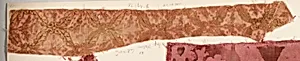
This exquisite pair of silk velvet fragments, to the late 16th century, hails from Italy—a golden era for European textile artistry during the late Renaissance and early Baroque periods. Measuring approximately 17½ by 3¼ inches and 19¼ by 3¼ inches, these strips showcase the opulent craftsmanship of Italian weavers, whose velvets were prized Europe for their luxurious pile and shimmering sheen. Likely remnants of grand ecclesiastical vestments, aristocratic garments, or lavish furnishings, they exemplify the technical mastery of silk velvet production in centers like Genoa or Venice. Silk velvet, classified among the finest Textiles-Velvets, was created through a complex loom process involving cutting loops to form a soft, reflective surface. This medium held immense cultural significance, symbolizing wealth and status; Italian velvets were exported widely, adorning royal courts and cathedrals. Their intricate patterns and vibrant dyes reflected Mannerist influences, blending floral motifs with geometric precision for dramatic visual impact. Today, these fragments grace the Metropolitan Museum of Art's European Sculpture and Decorative Arts collection, a generous 2002 gift from Nanette B. Kelekian honoring curator Olga Raggio. They offer a tactile glimpse into Renaissance luxury, reminding us how textiles wove artistry into everyday splendor.