
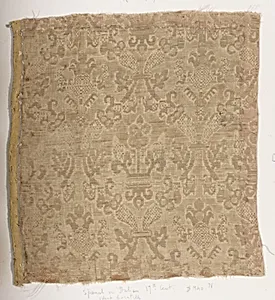
Fragment
Unknown Artist
early 17th century
Medium
Silk, metal thread
Dimensions
a: 12 1/4 x 11 5/8 in. (31.1 x 29.5 cm) b: 12 1/4 x 11 1/2 in. (31.1 x 29.2 cm)
Classification
Textiles-Velvets
Culture
Italian
Department
European Sculpture and Decorative Arts
Museum
Metropolitan Museum of Art, New York, NY
Credit
Gift of Nanette B. Kelekian, in honor of Olga Raggio, 2002
Accession Number
2002.494.28a, b
Rights
Public Domain
Tags
Art Historical Context
This exquisite pair of velvet, crafted in early 17th-century Italy showcases the opulence of Renaissance-era textile artistry. Woven from luxurious silk and shimmering metal threads, these pieces measure about 12 inches square each and feature delicate leaf motifs—a nod to nature's enduring appeal in Baroque design. Produced during Italy's golden age of weaving in centers like Genoa and Venice, such velvets were prized for, ecclesiastical vestments, and lavish furnishings, symbolizing wealth and refinement. The use of metal-thread brocading on a voided velvet ground creates a dynamic play of light and texture, where raised pile contrasts with metallic accents for a jewel-like effect. Italian weavers mastered these complex loom techniques, layering cut-pile silk with gold or silver threads to mimic embroidery. Though anonymous, the artist's skill reflects the guild traditions that made Italian textiles a global export, influencing courts from Europe to the Ottoman Empire. Today, preserved at The Metropolitan Museum of Art through a generous gift, these fragments offer a tactile glimpse into 17th-century luxury. Imagine them adorning a noble's cloak or altar hanging—their faded grandeur whispers of lives long past.