
Fragment
Unknown Artist
early 17th century
Medium
Silk, metal thread
Dimensions
Overall: 24 3/4 x 8 1/8 in. (62.9 x 20.6 cm)
Classification
Textiles-Woven
Culture
Italian
Department
European Sculpture and Decorative Arts
Museum
Metropolitan Museum of Art, New York, NY
Credit
Gift of Nanette B. Kelekian, in honor of Olga Raggio, 2002
Accession Number
2002.494.458
Rights
Public Domain
Tags
Art Historical Context
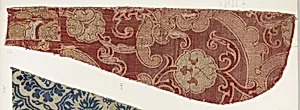
This exquisite silk and metal-thread fragment, woven in early 17th-century Italy offers a glimpse into the lavish world of Baroque-era textiles. Measuring 24¾ x 8⅛ inches, it showcases intricate floral motifs—a hallmark of Italian decorative arts—rendered with luxurious silk warps and shimmering metal threads, likely gold or silver lamé, for a radiant, jewel-like effect. As a woven textile classified in The Metropolitan Museum of Art's European Sculpture and Decorative collection, it survives as a precious remnant, possibly from a grand ecclesiastical vestment, altar hanging, or aristocratic garment. In the opulent courts and churches of Renaissance-to-Baroque Italy, such fabrics symbolized wealth and piety. Weavers in centers like Florence or Genoa mastered complex techniques like lampas weaving, interweaving metal threads to catch the light and evoke divine splendor. Flowers, symbolizing renewal and paradise, were popular motifs, blending artistic virtuosity with cultural reverence. Donated in 2002 by Nanette B. Kelekian in honor of curator Olga Raggio, this fragment highlights the enduring allure of Italian textile mastery. Pause to admire its tactile elegance—silk's softness contrasting metal's gleam—and imagine it adorning a sunlit chapel.