
Fragment
Unknown Artist
16th century
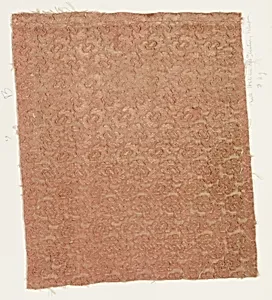
Medium
Silk, metal thread
Dimensions
Overall: 12 1/4 x 10 1/8 in. (31.1 x 25.7 cm)
Classification
Textiles-Velvets
Culture
Northern Italian
Department
European Sculpture and Decorative Arts
Museum
Metropolitan Museum of Art, New York, NY
Credit
Gift of Nanette B. Kelekian, in honor of Olga Raggio, 2002
Accession Number
2002.494.474
Rights
Public Domain
Art Historical Context
This exquisite *Fragment* from 16th-century Northern Italy offers a tantalizing glimpse into the opulence of Renaissance textiles. Crafted as a velvet piece measuring just 12¼ x 10⅛ inches (31.1 x 25.7 cm), it survives as a small remnant, likely from a larger panel, garment, or ecclesiastical furnishing. Housed in the Metropolitan Museum Art's Department of European Sculpture and Decor Arts, it was generously gifted in 2002 Nanette B. Kian in honor of curator Olga Raggio. The medium—rich silk combined with shimmering metal threads—highlights the masterful weaving techniques of Northern Italian workshops, renowned centers like Venice and Milan during the Renaissance. Velvets of this era were labor-intensive luxuries, often featuring cut-pile designs that created depth and luster, with metal threads (likely gold or silver lamé) adding a regal gleam. These textiles symbolized wealth and status, adorning nobility's clothing, interiors, and altarpieces. Though the artist remains unknown, this fragment embodies the cultural prestige of Italian silk production, a cornerstone of Europe's luxury trade. Its preservation invites us to imagine the vibrant courts and sacred spaces it once graced, a testament to the enduring allure of Renaissance craftsmanship.