
Fragment
Unknown Artist
16th century
Medium
Silk, metal thread
Dimensions
Overall: 10 3/8 x 10 3/8 in. (26.4 x 26.4 cm)
Classification
Textiles-Velvets
Culture
Italian
Department
European Sculpture and Decorative Arts
Museum
Metropolitan Museum of Art, New York, NY
Credit
Gift of Nanette B. Kelekian, in honor of Olga Raggio, 2002
Accession Number
2002.494.497
Rights
Public Domain
Art Historical Context
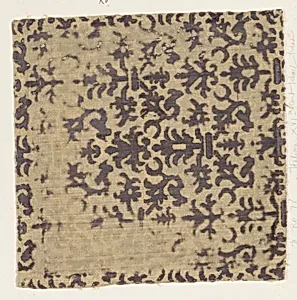
This exquisite 16th-century silk velvet fragment, measuring a modest 10⅜ × 10⅜ inches, hails from Italy and exemplifies the opulence of Renaissance textile arts. Woven with shimmering metal threads—likely gold or silver—side rich silk, it captures the luxurious craftsmanship of the period. As a surviving piece classified among Europe's finest velvets, it once adorned garments, ecclesiastical vestments, or palatial furnishings, showcasing the era's mastery of pile-weaving techniques that created a plush, light-reflecting surface. Italian velvet production flourished in weaving centers like Venice and Florence during the 16th century, fueled by thriving silk trade routes from the East and innovative looms. The integration of metal threads not only enhanced visual splendor but also symbolized wealth and status, making such fabrics coveted by nobility and clergy alike. This fragment's intricate patterns, though partial, hint at the bold motifs—floral, pomegranate, or geometric—typical of the time, reflecting Renaissance fascination with nature and symmetry. Generously gifted to The Metropolitan Museum of Art in 2002 by Nanette B. Kelekian in honor of curator Olga Raggio, this textile invites us to marvel at the anonymous artisans whose skill endures centuries later. A testament to Italy's cultural legacy, it reminds visitors of textiles' role as wearable art in daily splendor.