
Fragment
Unknown Artist
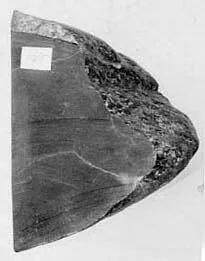
Medium
Nephrite
Dimensions
H. 4 3/8 in. (11.1 cm); W. 3 1/8 in. (7.9 cm); Th. 3 9/16 in. (9 cm)
Classification
Jade
Culture
Russia (Siberia)
Department
Asian Art
Museum
Metropolitan Museum of Art, New York, NY
Credit
Gift of Heber R. Bishop, 1902
Accession Number
02.18.129
Rights
Public Domain
Art Historical Context
This enigmatic nephrite fragment, originating from Siberia in Russia, invites visitors to ponder the craftsmanship of ancient cultures in one of the world's most remote regions. Carved from nephrite—a dense, resilient form of jade prized for its toughness and lustrous green hue—this small piece measures just 4 3/8 inches high, 3 1/8 inches wide, and 3 9/16 inches thick. Its compact form suggests it may be part of a larger object, such as a tool, ornament, or ritual item, though its exact purpose remains a mystery due to the unknown artist and date. Nephrite jade holds profound cultural significance across Asia and Eurasia, often symbolizing purity, protection, and endurance. In Siberia, indigenous peoples have worked this stone for millennia, sourcing it from mountainous regions like the Sayan or Lake Baikal areas. The labor-intensive carving techniques—likely involving abrasion with sand or harder stones—highlight the value placed on jade in pre-modern societies, where it was used for both practical tools and spiritual artifacts. Acquired as a gift from collector Heber R. Bishop in 1902, this fragment now resides in the Metropolitan Museum of Art's Asian Art Department. It exemplifies early 20th-century fascination with global jades and offers a tangible link to Siberia's rich, underrepresented artistic heritage, reminding us of the enduring allure of ancient materials.