
Fragment
Unknown Artist
14th century
Medium
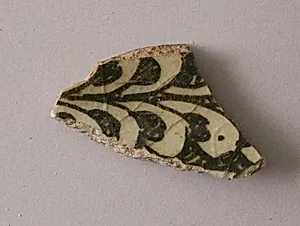
Stonepaste; white slip; black underglaze; transparent, colorless glaze
Classification
Ceramics
Department
Islamic Art
Museum
Metropolitan Museum of Art, New York, NY
Credit
Rogers Fund, 1907
Accession Number
07.238.63
Rights
Public Domain
Art Historical Context
This enigmatic *Fragment* from the th century offers a glimpse into the sophisticated world of Islamic ceramics, likely originating from regions like Persia or Syria during the Ilkhanid or Mamluk eras. As a surviving piece of a larger vessel or architectural element, it exemplifies the era's mastery of stonepaste—a composite body of quartz, clay, and frit developed by Islamic potters to rival Chinese porcelain's translucency and strength. Acquired through the Rogers Fund in 190, it now graces the Metropolitan Museum of Art's Islamic Art department. Crafted with white slip over stonepaste, adorned in black underglaze motifs, and sealed with a transparent, colorless glaze, the fragment highlights innovative techniques that allowed for vibrant, durable decoration. Underglaze painting, fired beneath the glaze, ensured colors endured daily use or harsh environments, a hallmark of 13th- and 14th-century production centers like Kashan or Tabriz. These methods not only advanced technical prowess but also reflected cultural exchanges along the Silk Road, blending local ingenuity with influences from China and the Mediterranean. Though incomplete, this artifact whispers of opulent courts and bustling trade, where ceramics symbolized refinement and piety. Visitors are invited to imagine its original floral or geometric patterns—ubiquitous in Islamic art—evoking paradise gardens or sacred scripts, underscoring the timeless allure of this golden age.