
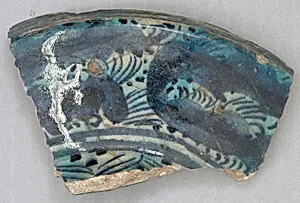
Fragment
Unknown Artist
14th–15th century
Medium
Stonepaste; underglaze painted under colorless glaze
Classification
Ceramics
Department
Islamic Art
Museum
Metropolitan Museum of Art, New York, NY
Credit
Rogers Fund, 1908
Accession Number
08.256.171
Rights
Public Domain
Art Historical Context
This enigmatic *Fragment*, crafted by an unknown artist in the 14–15th century, a tantalizing glimpse into the golden age of Islamic ceramics.oused in the Metropolitan Museum of Art's Islamic Art department (acquired through the Rogers Fund in 8), this piece survives as a delicate remnant—likely from a larger vessel or tile—showcasing the ingenuity of medieval potters in the Islamic world, possibly from regions like Iran, Syria, or Egypt. The medium, stonepaste (also called fritware), was a revolutionary Islamic innovation blending ground quartz, clay, and glass frit to create a fine, white body that imitated coveted Chinese porcelain. Artists painted intricate designs in underglaze pigments beneath a transparent colorless glaze, firing the piece to fuse colors vibrantly and durably. This technique allowed for bold motifs, subtle shading, and resistance to wear, making such ceramics prized for both daily use and architectural decoration in mosques and palaces. Though incomplete, the fragment embodies the cultural flourishing of the Timurid or Mamluk eras, where ceramics symbolized technical mastery and aesthetic refinement. It invites us to ponder the hands that shaped it, bridging everyday artistry with timeless beauty in Islamic tradition.