
Fragment
Unknown Artist
14th–15th century
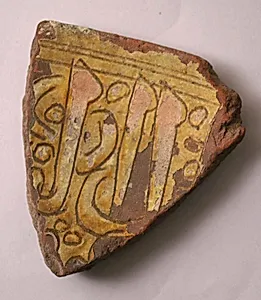
Medium
Earthenware; incised decoration through white slip and coloring under transparent glaze
Classification
Ceramics
Department
Islamic Art
Museum
Metropolitan Museum of Art, New York, NY
Credit
Rogers Fund, 1908
Accession Number
08.256.254
Rights
Public Domain
Art Historical Context
This delicate earthenware fragment, dating to the 14th–15th century, offers a glimpse into the refined world of Islamic ceramics. Crafted by an unknown artist, it showcases incised decoration carved through a white slip—a technique known as sgraffito—before vibrant coloring was applied and sealed under a transparent glaze. This created striking contrasts and depth, allowing patterns to emerge vividly against the clay body, typical of vessels or tiles from regions like Persia or Syria. In the Islamic art tradition, such ceramics flourished during the medieval period, blending functionality with exquisite ornamentation. The 14th–15th centuries saw innovations in glaze technology under dynasties like the Timurids and Mamluks, where earthenware served as an accessible canvas for intricate motifs inspired by nature, geometry, and calligraphy. Though just a fragment, it exemplifies the era's mastery in transforming everyday objects into art. Acquired through the Rogers Fund in 1908, this piece from the Metropolitan Museum of Art's Islamic Art department invites us to appreciate the anonymous artisans whose skill endures, bridging centuries of cultural exchange along the Silk Road.