
Fragment
Unknown Artist
9th century
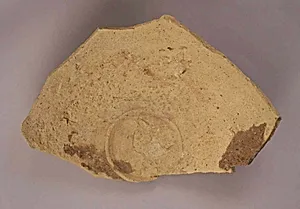
Medium
Earthenware; unglazed
Dimensions
H. 2 5/16 in. (5.8 cm) W. 6 9/16 in. (16.7 cm) D. 4 3/8 in. (11.1 cm)
Classification
Ceramics
Department
Islamic Art
Museum
Metropolitan Museum of Art, New York, NY
Credit
Gift of Noel E. Baker, 1952
Accession Number
52.130.17
Rights
Public Domain
Art Historical Context
This modest earthenware fragment, dating to the 9th, offers a glimpse into the early Islamic world during the Abbasid Caliphate's golden age. Housed in the Metropolitan Museum of Art's Department of Islamic Art, it just over 2 inches high and 6 inches wide, suggesting it is a surviving piece of a larger vessel or architectural element. Such unglazed ceramics were common in regions like Iraq, Syria, or Persia, where pottery production flourished alongside advancements in science, literature, and trade. Crafted from earthenware—a fired clay body unglazed to preserve its natural, earthy texture—this fragment highlights the foundational techniques of Islamic ceramics before the widespread adoption of lusterware and tin-glazed faience in later centuries. Unglazed pieces like this were often hand-formed or wheel-thrown, valued for everyday use or as affordable trade goods across the vast Islamic empire, from Baghdad to Cordoba. Their simplicity belies the cultural exchange they represent, linking pre-Islamic traditions with the innovative artistry of the era. Though its exact form and decoration remain enigmatic due to its fragmentary state, this artifact, generously gifted by Noel E. Baker in 1952, reminds us how even small survivors illuminate daily life in a transformative period of history. A testament to enduring craftsmanship, it invites us to ponder the hands that shaped it over a millennium ago.