
Fragment
Unknown Artist
9th century
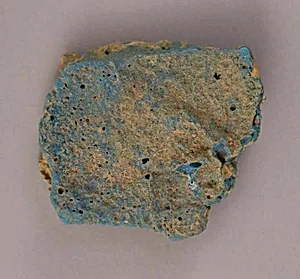
Medium
Earthenware; glazed
Dimensions
H. 1 1/2 in. (3.8 cm) W. 1 3/4 in. (4.5 cm) D. 1/4 in. (0.6 cm)
Classification
Ceramics
Department
Islamic Art
Museum
Metropolitan Museum of Art, New York, NY
Credit
Gift of Noel E. Baker, 1952
Accession Number
52.130.19
Rights
Public Domain
Art Historical Context
This delicate fragment, dating to the 9th, exemplifies the early mastery of glazed earthenware in Islamic art. Measuring just 1 1/2 inches high, 1 3/4 inches wide, and a mere 1/4 inch deep, it is a tiny survivor—likely from a larger vessel, tile, or architectural element. The use of earthenware, a common and accessible clay body, transformed by a glossy glaze, highlights a pivotal technique in Islamic ceramics. Glazing not only sealed the porous surface for durability and waterproofing but also created a vibrant canvas for decoration, often featuring intricate patterns that adhered to aniconic traditions favoring geometry and arabesques. Crafted during the Abbasid Caliphate's golden age (centered in Baghdad), such pieces reflect the era's technological and artistic innovations, influenced by trade routes linking China, Persia, and the Mediterranean. Glazed ceramics like this proliferated as affordable luxury items for homes, mosques, and palaces, symbolizing cultural refinement without relying on costly metals or glass. Though the exact design is lost to time, its preservation speaks to the enduring appeal of these objects. Generously gifted to the Metropolitan Museum of Art by Noel E. Baker in 1952, this fragment invites us to ponder the daily artistry of a vibrant Islamic world, where even shards whisper tales of innovation and beauty.