
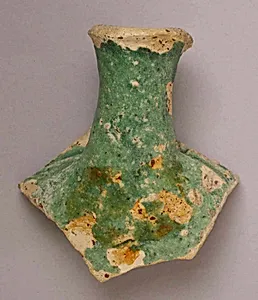
Fragment
Unknown Artist
9th–10th century
Medium
Earthenware; glazed
Classification
Ceramics
Department
Islamic Art
Museum
Metropolitan Museum of Art, New York, NY
Credit
Gift of Mr. and Mrs. Wendell M. Hastings, 1960
Accession Number
60.23.5
Rights
Public Domain
Art Historical Context
This exquisite *Fragment* from the th–10th century a glimpse into the vibrant of early Islamic ceramics. Crafted from glazed earthenware by an unknown artist, it hails from the Islamic Art collection at the Metropolitan Museum of, gifted by Mr. and Mrs. M. Hastings in 0. During the Abbasid Caliphate's Golden Age, potters in regions like Iraq and Iran mastered glazing techniques on earthenware, creating durable, shimmering surfaces that mimicked coveted Chinese porcelain—long unavailable through trade routes. The significance of this medium lies in its innovation: a lead- or tin-based glaze fired over low-fired clay produced brilliant colors, often turquoise or deep blues, making everyday vessels and tiles both functional and luxurious. Though just a fragment, it exemplifies the period's technical prowess and aesthetic refinement, where motifs drawn from nature or geometry adorned homes, mosques, and palaces, reflecting Islamic artistry's emphasis on beauty in utility. Today, such pieces remind us of a cosmopolitan era of cultural exchange along the Silk Road. Pause here to appreciate how this humble shard captures the ingenuity of artisans whose work influenced ceramics worldwide for centuries.