
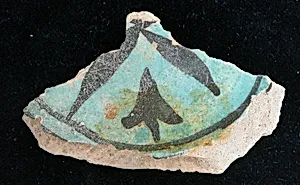
Fragment
Unknown Artist
12th–13th century
Medium
Stonepaste; underglaze painted
Dimensions
H. 15/16 in. (2.4 cm) W. 2 13/16 in. (7.1 cm) D. 1 11/16 in. (4.3 cm) Wt. 1 oz. (28.4 g)
Classification
Ceramics
Department
Islamic Art
Museum
Metropolitan Museum of Art, New York, NY
Credit
Gift of Mr. and Mrs. Wendell M. Hastings, 1960
Accession Number
60.23.16
Rights
Public Domain
Art Historical Context
This delicate ceramic fragment, dating to the 12th–13th century, hails from the vibrant world of Islamic art and showcases the ingenuity of medieval potters. Crafted from stonepaste—a composite material of quartz, clay, and frit that mimicked the prized translucency of Chinese porcelain—this tiny piece (just under an inch tall) was underglaze painted before firing. This technique allowed durable, vivid designs to bond seamlessly with the glassy surface, resisting wear far better than earlier methods. Originating likely from regions like Iran, Syria, or Egypt during a golden age of Islamic ceramics, the fragment represents a pivotal innovation. Stonepaste bodies enabled potters to create thin-walled vessels and tiles with intricate motifs, flourishing under patronage of sultans and scholars. Though incomplete—perhaps from a bowl or architectural element—its survival speaks to the era's technical mastery and the enduring allure of Islamic decorative arts. Today, this gift to the Metropolitan Museum of Art from Mr. and Mrs. Wendell M. Hastings in 1960 invites us to marvel at everyday artistry from a distant past, reminding visitors of how even shards carry stories of cultural exchange along ancient trade routes.