
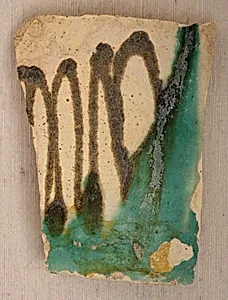
Fragment
Unknown Artist
probably 9th century
Medium
Earthenware; molded decoration, glazed
Classification
Ceramics
Department
Islamic Art
Museum
Metropolitan Museum of Art, New York, NY
Credit
Gift of Mr. and Mrs. Wendell M. Hastings, 1960
Accession Number
60.23.39
Rights
Public Domain
Art Historical Context
This exquisite *Fragment* from the th century exemplifies the early brilliance of Islamic ceramics, crafted by an unknown artist using earthenware with molded decoration and a glossy glaze. Likely part of a larger vessel or architectural element, its surface bears intricate raised patterns typical of the Abbasid period (750–1258 CE), when potters in regions like Iraq and Syria pioneered techniques to mimic costly Chinese porcelain. The medium's significance lies in its innovation: earthenware bodies were molded to create detailed relief designs—floral motifs, geometric shapes, or calligraphy—before applying a transparent glaze fired at high temperatures. This method produced durable, shimmering pieces that adorned homes, mosques, and palaces, blending functionality with artistry. Such fragments reveal the cultural exchange along Silk Road trade routes, where Islamic artisans adapted Eastern influences into distinctly vibrant styles. Generously gifted to the Metropolitan Museum of Art in 1960 by Mr. and Mrs. Wendell M. Hastings, this piece offers a tangible glimpse into the Islamic world's golden age of craftsmanship, highlighting how everyday objects became canvases for sophisticated design.