
Fragment
Unknown Artist
9th–10th century
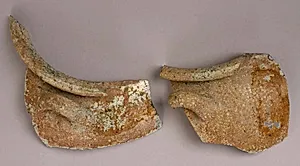
Medium
Earthenware
Classification
Ceramics
Department
Islamic Art
Museum
Metropolitan Museum of Art, New York, NY
Credit
Gift of Mr. and Mrs. Wendell M. Hastings, 1960
Accession Number
60.23.44a, b
Rights
Public Domain
Art Historical Context
This delicate earthenware fragment, dating to the 9th–10th century, offers a window into the vibrant world of early Islamic ceramics. Housed in the Metropolitan Museum of Art's Islamic department, it was generously gifted by Mr. and. Wendell M. Hastings 1960. As a simple yet enduring medium, earthenware—fired clay often left unglazed or treated with basic slips—formed the backbone of pottery production across the Abbasid Caliphate, from Mesopotamia to Persia. Crafted during Islam's Golden Age, this piece reflects the ingenuity of artisans in regions like Iraq and Syria, where potters revived ancient techniques while innovating for everyday use. Earthenware vessels held water, food, and oils in bustling households and markets, their sturdy forms enabling widespread trade along Silk Road routes. Though fragmented, such relics reveal subtle surface treatments like incising or stamping, hallmarks of a burgeoning ceramic tradition that paved the way for later opulent glazes and lusterware. Today, this unassuming shard underscores the cultural richness of medieval Islam, where functional art bridged utility and beauty. It invites us to imagine the hands that shaped it, connecting visitors to a thriving civilization's daily rhythms.