
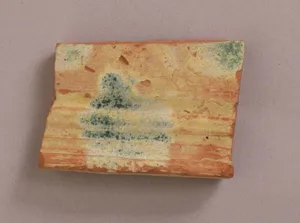
Fragment
Unknown Artist
9th century
Medium
Earthenware; slip painted and glazed
Classification
Ceramics
Department
Islamic Art
Museum
Metropolitan Museum of Art, New York, NY
Credit
Gift of Mr. and Mrs. Wendell M. Hastings, 1960
Accession Number
60.23.65
Rights
Public Domain
Art Historical Context
This exquisite *Fragment* from the 9th century offers a glimpse into the vibrant world of early Islamic ceramics. Crafted from earthenware and adorned with slip painting before glazing, it hails from the Islamic Art collection at the Metropolitan Museum of Art, generously gifted by Mr. and Mrs. Wendell M. Hastings in 1960. Dating to the Abbasid era, such pieces were produced in bustling centers like Iraq or Persia, where pottery became a canvas for everyday beauty and trade. The technique of slip painting—applying colored liquid clay to create intricate designs before a final glaze and firing—was revolutionary. This method not only yielded durable, waterproof vessels but also allowed for bold motifs in turquoise and manganese hues, precursors to the famous lusterware that dazzled later Islamic artisans. Though only a fragment survives, it whispers of the era's technical ingenuity and aesthetic refinement. In the Islamic world, ceramics like this bridged utility and art, adorning homes and mosques while spreading cultural influence along Silk Road routes. A testament to anonymous mastery, it invites us to marvel at how 9th-century hands shaped enduring splendor.