
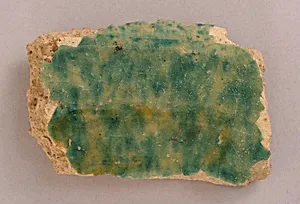
Fragment
Unknown Artist
9th–10th century
Medium
Earthenware; glazed
Classification
Ceramics
Department
Islamic Art
Museum
Metropolitan Museum of Art, New York, NY
Credit
Gift of Mr. and Mrs. Wendell M. Hastings, 1960
Accession Number
60.23.85
Rights
Public Domain
Art Historical Context
This exquisite *Fragment* from the th–10th century the early brilliance of Islamic ceramics, crafted from glazed earthenware during the Abbasid era. Produced in regions like Iraq or Persia, such pieces were part of a flourishing tradition where potters mastered glazing techniques to create durable, shimmering surfaces. The tin-opacified glaze, a hallmark innovation, allowed for vivid colors and intricate designs, transforming everyday earthenware into objects of beauty. In Islamic art, ceramics held immense cultural importance, adorning homes, mosques, and palaces with geometric patterns, arabesques, and calligraphy that reflected spiritual and mathematical sophistication. This fragment, though small, captures the era's technical prowess—firing clay at low temperatures then applying lead- or tin-based glazes for a glossy finish that resisted wear. Such wares influenced global pottery traditions, bridging East and West. Generously gifted to the Metropolitan Museum of Art in 1960 by Mr. and Mrs. Wendell M. Hastings, this piece invites us to ponder the anonymous artisans whose skill endures, whispering stories of a golden age of innovation and artistry.