
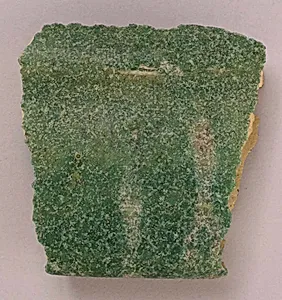
Fragment
Unknown Artist
9th–10th century
Medium
Earthenware; glazed
Classification
Ceramics
Department
Islamic Art
Museum
Metropolitan Museum of Art, New York, NY
Credit
Gift of Mr. and Mrs. Wendell M. Hastings, 1960
Accession Number
60.23.86
Rights
Public Domain
Art Historical Context
This exquisite *Fragment* from the th–10th century the early mastery of glazed earthenware in Islamic art. Crafted during the Abbasidiphate's golden age, when ceramic production flourished in regions like Iraq and Persia, this piece likely originated from a larger vessel or architectural element. The application of glaze—a translucent coating fired onto the earthenware body—created a durable, lustrous surface that protected the clay while allowing for vibrant colors and intricate designs, revolutionizing pottery beyond mere utility. Glazed ceramics like this marked a pivotal innovation in Islamic craftsmanship, bridging utilitarian objects with artistic expression. Artisans developed sophisticated kilns and chemical glazes, often in turquoise or cobalt blues, evoking the opulence of metalwork or glass without the high cost. Though only a fragment survives, it whispers of the era's cultural exchange along Silk Road trade routes, where techniques blended Persian, Chinese, and local traditions. Today, this treasure resides in the Metropolitan Museum of Art's Islamic Art Department, a generous gift from Mr. and Mrs. Wendell M. Hastings in 1960. It invites us to ponder the anonymous hands that shaped it, reminding visitors of the enduring beauty in everyday artifacts from a distant past.