
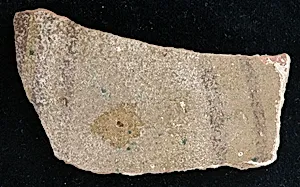
Fragment
Unknown Artist
9th–10th century
Medium
Earthenware; glazed
Dimensions
H. 5/8 in. (1.6 cm) W. 3 5/16 in. (8.4 cm) D. 1 13/16 in. (4.6 cm) Wt. 1.2 oz. (34 g)
Classification
Ceramics
Department
Islamic Art
Museum
Metropolitan Museum of Art, New York, NY
Credit
Gift of Mr. and Mrs. Wendell M. Hastings, 1960
Accession Number
60.23.95
Rights
Public Domain
Art Historical Context
This delicate earthenware fragment, dating to the 9th–10th century, offers a glimpse into the sophisticated ceramic traditions of the early Islamic world. Housed in the Metropolitan Museum of Art's Department Islamic Art, this tiny piece—measuring just 5/8 inch high and weighing a mere 1.2 ounces—was generously gifted by Mr. and Mrs. Wendell M. in 1960. Though its exact origin and function remain unknown, such fragments often survive from vessels, tiles, or architectural decorations, highlighting the everyday artistry of Abbasid-era potters in regions like Iraq or Persia. The use of glazing on earthenware marks a pivotal innovation in Islamic ceramics during this golden age of craftsmanship. Unlike unglazed pottery, the glossy glaze—likely tin-opacified for an opaque, luminous effect—protected the friable clay body while allowing vibrant colors and intricate designs. This technique not only enhanced durability for practical use but also elevated ceramics to luxury status, rivaling imported Chinese porcelain and influencing global pottery traditions. Today, this unassuming shard captivates with its testament to lost splendor, reminding us how even fragments preserve cultural stories across millennia. Visitors to the Met can appreciate how such artifacts bridge the artistry of the past with our modern curiosity.