
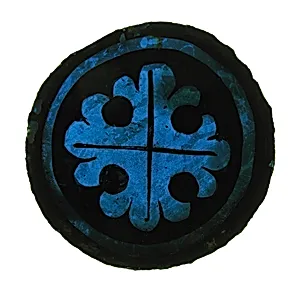
Fragment
Unknown Artist
12th–17th century (?)
Medium
Pot-metal glass and vitreous paint
Dimensions
2 3/16 × 1/8 in. (5.5 × 0.3 cm)
Classification
Glass-Stained
Culture
European
Department
Medieval Art
Museum
Metropolitan Museum of Art, New York, NY
Credit
Gift of George D. Pratt, 1930
Accession Number
30.73.134
Rights
Public Domain
Art Historical Context
This delicate fragment, titled simply *Fragment*, hails from medieval Europe, likely spanning the 12th to 17th centuries—a broad timeframe that underscores the challenges of dating such ancient glass. Measuring just 2 3/16 × 1/8 inches, it's a tiny survivor from what were once grand stained-glass windows, probably adorning cathedrals or noble chapels. Housed in the Metropolitan Museum of Art's Medieval department since a 1930 gift from George D. Pratt, it the fragility and enduring allure of these luminous artifacts. Crafted from pot-metal glass—colored throughout by metallic oxides for jewel-like translucency—and detailed with vitreous paint (a glassy enamel fired onto the surface for fine lines and shading), the piece showcases masterful medieval techniques. Pot-metal allowed artisans to achieve vibrant hues without surface paints fading over time, while vitreous paint added depth, mimicking flesh tones or architectural details in biblical scenes or heraldry. Though its exact imagery is lost to time, this fragment whispers of Europe's Gothic and Renaissance glassmaking traditions, where light filtered through color told sacred stories to the faithful. Its preservation highlights the artistry of anonymous craftsmen whose work transformed stone spaces into radiant narratives.