
Fragment
Unknown Artist
ca. 1130–40
Medium
Stone
Dimensions
Overall: 15 1/4 x 12 1/4 in. (38.7 x 31.1 cm)
Classification
Sculpture-Architectural
Culture
Catalan
Department
The Cloisters
Museum
Metropolitan Museum of Art, New York, NY
Credit
The Cloisters Collection, 1925
Accession Number
25.120.604
Rights
Public Domain
Art Historical Context
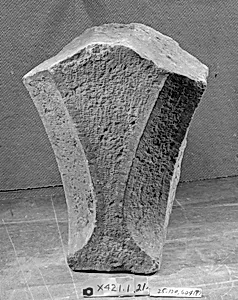
This captivating stone fragment, dating to around 1130–40, hails from Catalonia and exemplifies the robust architectural sculpture of the Romanesque era. Carved from stone and measuring 15¼ x 12¼ inches, it once formed part of a larger ecclesiastical structure, such as a church portal, capital, or frieze—common features in medieval Catalan monasteries and cathedrals. Acquired as part of The Cloisters in 1925, it now resides in the Metropolitan Museum of Art's Cloisters, a branch dedicated to medieval European art, transporting visitors back to a time when stone masons crafted enduring symbols of faith and craftsmanship. In 12th-century Catalonia, Romanesque architecture flourished amid a blend of Christian pilgrimage routes and local traditions, producing bold, high-relief carvings that adorned pilgrimage churches like those along the Camino de Santiago. Though the artist remains unknown, the fragment's survival speaks to the durability of stone as a medium, ideal for withstanding centuries of weathering while conveying narrative depth through incised details and volumetric forms. Its architectural classification underscores the era's emphasis on integrating sculpture seamlessly with buildings, enhancing spiritual spaces. Today, this modest yet evocative piece invites reflection on Catalonia's rich medieval heritage, where art served both decorative and didactic purposes, instructing the faithful through visual storytelling. A testament to anonymous mastery, it reminds us how fragments can preserve profound cultural echoes.