
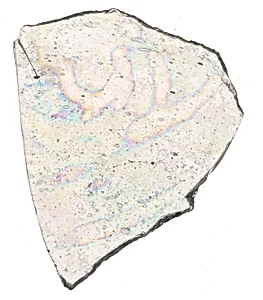
Fragment
Unknown Artist
13th century
Medium
Stained Glass
Dimensions
3 1/8 × 2 9/16 × 1/8 in. (7.9 × 6.5 × 0.3 cm)
Classification
Glass-Stained
Culture
Crusader
Department
Medieval Art
Museum
Metropolitan Museum of Art, New York, NY
Credit
Gift of Clarence H. Mackay, Archer M. Huntington, Stephen H. P. Pell and Bashford Dean, 1928
Accession Number
28.99.650
Rights
Public Domain
Art Historical Context
This delicate stained glass fragment, measuring just over three inches tall, hails from the 13th century and embodies the artistry of the Crusader kingdoms in the Holy Land. Crafted during the height of the Crusades, when Western European settlers built churches blending Gothic influences with local Eastern styles, it survives as a rare glimpse into medieval religious architecture. Likely part of a larger window narrating biblical scenes or saints, its Crusader origins highlight cultural fusion in places like Jerusalem or Acre. Stained glass was a pinnacle of medieval technique, using vibrant pot-metal glass colored by metal oxides and detailed with enamel paints fired at high temperatures for durability. This thin, luminous sliver (only 1/8 inch thick) would have glowed ethereally in sunlight, drawing worshippers' eyes heavenward. Though anonymous, its preservation speaks to the skill of workshops serving Frankish settlers amid turbulent times. Generously gifted to The Metropolitan Museum of Art in 1928, this fragment invites us to ponder the fragile beauty of history— a testament to faith, craft, and cross-cultural exchange in the medieval world.