
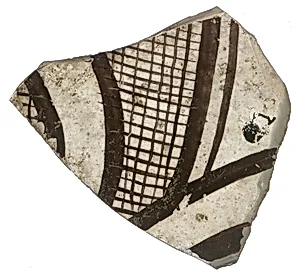
Fragment
Unknown Artist
13th century
Medium
Stained Glass
Dimensions
1 15/16 × 2 1/16 × 3/16 in. (5 × 5.3 × 0.5 cm)
Classification
Glass-Stained
Culture
Crusader
Department
Medieval Art
Museum
Metropolitan Museum of Art, New York, NY
Credit
Gift of Clarence H. Mackay, Archer M. Huntington, Stephen H. P. Pell and Bashford Dean, 1928
Accession Number
28.99.658
Rights
Public Domain
Art Historical Context
This delicate stained glass fragment, dating to the 13th, offers a tantalizing glimpse into the artistic world of the Crusader in the Holy Land. Created during the height of the Crusades—when Western European settlers established states like the Kingdom of Jerusalem—such pieces were likely part of larger windows in churches or castles. Its Crusader attribution highlights a unique cultural fusion: Frankish (European) techniques blended with Byzantine and Islamic influences from the Levant, reflecting the diverse world of medieval pilgrims, knights, and artisans. Stained glass was a pinnacle of medieval craftsmanship, using pot-metal glass—where vivid colors like ruby red or cobalt blue were fused into the material itself during firing. Details were added with vitreous paints and further fired for durability. Though only about 2 inches square, this fragment exemplifies the precision required for these luminous panels, which transformed sunlight into storytelling spectacles of saints, biblical scenes, or heraldry in sacred spaces. Preserved through generous gifts to The Metropolitan Museum of Art in 1928, it stands as a rare survivor from a turbulent era, evoking the spiritual fervor and cross-cultural exchanges of the Crusades. Visitors are invited to imagine it glowing in a distant chapel, bridging worlds across centuries.