
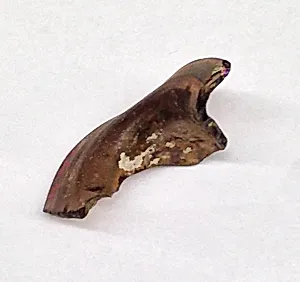
Fragment
Unknown Artist
ca. 1150–ca. 1250
Medium
Glass, ceramic
Dimensions
L. 1 3/4 in. (4.5 cm)
Classification
Glass-Vessels
Culture
European or Middle Eastern
Department
Medieval Art
Museum
Metropolitan Museum of Art, New York, NY
Credit
Gift of Clarence H. Mackay, Archer M. Huntington, Stephen H. P. Pell and Bashford Dean, 1928
Accession Number
28.99.94
Rights
Public Domain
Art Historical Context
This delicate fragment, dating to around 1150–1250, offers a tantalizing glimpse into medieval craftsmanship from either Europe or the Middle East Measuring just 1¾ inches long, it once belonged to a larger glass vessel, a common luxury item in the era of Crusades and expanding trade routes. The uncertainty of its origin highlights the vibrant cultural exchanges between Islamic artisans—renowned for their glassblowing prowess—and European workshops, where such wares symbolized status and sophistication. Crafted from glass with possible ceramic elements, the piece exemplifies advanced techniques like free-blowing and trailing, which allowed for thin, translucent walls and intricate forms. Medieval glass vessels were prized for their clarity and iridescence, often used for drinking, storage, or as diplomatic gifts. Surviving fragments like this are rare, providing invaluable evidence of everyday opulence amid the fragility of the material. Now housed in the Metropolitan Museum of Art's Medieval Art department, thanks to a 1928 gift from prominent donors, this artifact invites us to ponder the hands that shaped it—anonymous yet masterful—in a world bridging East and West.