
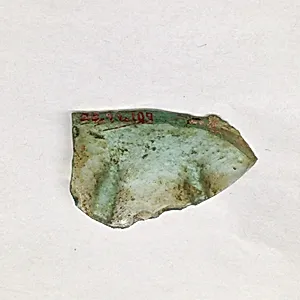
Fragment
Unknown Artist
ca. 1150–ca. 1250
Medium
Glass, ceramic
Dimensions
L. 1 9/16 in. (4 cm)
Classification
Glass-Vessels
Culture
European or Middle Eastern
Department
Medieval Art
Museum
Metropolitan Museum of Art, New York, NY
Credit
Gift of Clarence H. Mackay, Archer M. Huntington, Stephen H. P. Pell and Bashford Dean, 1928
Accession Number
28.99.109
Rights
Public Domain
Art Historical Context
This delicate fragment, dating to around 1150–1250, offers a glimpse into medieval craftsmanship from either Europe or the Middle East. Measuring just 1 9/16 inches (4 cm) long, it survives from a larger glass vessel, hinting at the everyday luxuries of the era—perhaps a beaker, flask, or decorative container used in households or trade. Its uncertain cultural origins reflect the vibrant exchange along Silk Road routes and Mediterranean ports, where Islamic glassmaking techniques influenced European artisans and vice versa. Crafted from glass with ceramic elements, the piece showcases advanced medieval technologies. Glass was typically free-blown or molded into thin, translucent forms, often colored or trailed with threads for elegance, while ceramic additions might have provided structural reinforcement or decorative inlays. Such hybrid materials were innovative, blending the clarity of glass with ceramic's durability, and highlight the era's experimentation amid growing trade in luxury goods. Preserved through generous gifts to the Metropolitan Museum of Art, this unassuming shard underscores the fragility of history. It invites us to ponder the hands that shaped it—anonymous potters and glassblowers whose skills bridged continents—reminding visitors of medieval life's interconnected artistry.