
Fragment
Unknown Artist
ca. 1150–ca. 1250
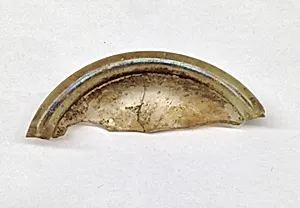
Medium
Glass, ceramic
Dimensions
L. 2 1/2 in. (6.4 cm)
Classification
Glass-Vessels
Culture
European or Middle Eastern
Department
Medieval Art
Museum
Metropolitan Museum of Art, New York, NY
Credit
Gift of Clarence H. Mackay, Archer M. Huntington, Stephen H. P. Pell and Bashford Dean, 1928
Accession Number
28.99.142
Rights
Public Domain
Art Historical Context
This delicate fragment, dating to around 1150–1250, offers a tantalizing glimpse into medieval craftsmanship from either Europe or the Middle East Measuring just 2½ inches (6.4 cm) in length, it hails from a glass vessel blending glass and ceramic elements—a rare combination that highlights the innovative material experimentation of the era. Acquired by the Metropolitan Museum of Art 1928 through generous gifts from collectors like Clarence H. Mackay Bashford Dean, it in the Medieval Art department, underscoring its value as a preserved artifact of daily luxury. In the 12th–13th centuries, glass vessels were prized across Eurasia for their translucency and versatility, often used for tableware, lamps, or religious items. Techniques like free-blowing and molding allowed artisans to create thin, elegant forms, while ceramic inlays or composites added durability and decoration. The uncertain European or Middle Eastern origin reflects vibrant trade routes along the Silk Road and Mediterranean, where Islamic glassmakers influenced Byzantine and Western styles with colorful enameling and gilding—though this fragment's precise method remains a mystery, inviting speculation. Though small, such survivals illuminate the artistry of anonymous makers, bridging cultures and evoking bustling medieval markets. Visitors can ponder its journey from an ancient table to a modern vitrine, a testament to enduring human ingenuity.