
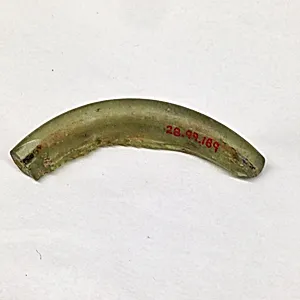
Fragment
Unknown Artist
ca. 1150–ca. 1250
Medium
Glass, ceramic
Dimensions
L. 2 3/8 in. (6 cm)
Classification
Glass-Vessels
Culture
European or Middle Eastern
Department
Medieval Art
Museum
Metropolitan Museum of Art, New York, NY
Credit
Gift of Clarence H. Mackay, Archer M. Huntington, Stephen H. P. Pell and Bashford Dean, 1928
Accession Number
28.99.189
Rights
Public Domain
Art Historical Context
This delicate fragment, dating to around 1150–1250, offers a tantalizing glimpse into medieval craftsmanship. Measuring just 2⅜ inches (6 cm) long, it hails from a glass vessel blending glass and ceramic materials in a classification typical of the era's innovative container designs. Housed in the Metropolitan Museum of Art's Medieval Art, its uncertain origins—either European or Middle Eastern— the vibrant cultural exchanges along medieval trade routes, from the bustling markets of Venice to the workshops of the Islamic world. Glass vessels like this were prized luxury items, often used for perfumes, oils, or spices, symbolizing wealth and sophistication. The anonymous artisan's skill in fusing glass with ceramic suggests advanced techniques, such as molding or enameling, which allowed for durable, ornate forms amid the fragility of blown glass. Such fragments survive as archaeological treasures, evoking the daily lives of merchants, nobles, and pilgrims. Gifted to the Met in 1928 by prominent donors including Clarence H. Mackay and Archer M. Huntington, this piece underscores the era's artistic fusion across continents. Though small, it whispers stories of a interconnected medieval world, inviting us to ponder the hands that shaped it centuries ago.