
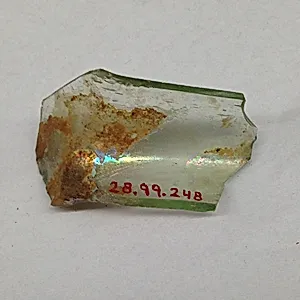
Fragment
Unknown Artist
ca. 1150–ca. 1250
Medium
Glass, ceramic
Dimensions
L. 1 7/8 in. (4.8 cm)
Classification
Glass-Vessels
Culture
European or Middle Eastern
Department
Medieval Art
Museum
Metropolitan Museum of Art, New York, NY
Credit
Gift of Clarence H. Mackay, Archer M. Huntington, Stephen H. P. Pell and Bashford Dean, 1928
Accession Number
28.99.248
Rights
Public Domain
Art Historical Context
This delicate fragment, dating to around 1150–1250, offers a tantalizing glimpse into medieval craftsmanship from either Europe or the Middle East. Likely part of a small glass vessel—perhaps a beaker, flask, or perfume bottle—its modest length of just 1 7/8 inches (4.8 cm) belies the sophistication of the era. During the High Middle Ages, vibrant trade routes along the Mediterranean facilitated the exchange of glassmaking techniques, blending Islamic innovations like free-blowing and mold-forming with European traditions. The inclusion of ceramic elements hints at composite construction, possibly for durability or decoration. Glass vessels from this period were prized luxury items, used for everything from tableware to apothecary needs, symbolizing wealth and cultural connectivity amid the Crusades. Artisans achieved stunning translucency and color through soda-lime recipes, often sourced from Levantine sands. Though the artist remains unknown, such fragments underscore the anonymous mastery of medieval workshops, where functionality met artistry. Generously gifted to The Metropolitan Museum of Art in 1928 by collectors Clarence H. Mackay, Archer M. Huntington, Stephen H. P. Pell, and Bashford Dean, this piece invites us to ponder the lives it touched—traded across continents, now preserved as a bridge to the past.