
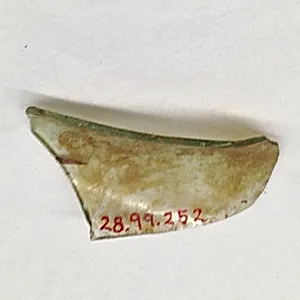
Fragment
Unknown Artist
ca. 1150–ca. 1250
Medium
Glass, ceramic
Dimensions
L. 2 in. (5.1 cm)
Classification
Glass-Vessels
Culture
European or Middle Eastern
Department
Medieval Art
Museum
Metropolitan Museum of Art, New York, NY
Credit
Gift of Clarence H. Mackay, Archer M. Huntington, Stephen H. P. Pell and Bashford Dean, 1928
Accession Number
28.99.252
Rights
Public Domain
Art Historical Context
This delicate fragment, dating to around 1150–1250, offers a tantalizing glimpse into medieval craftsmanship during a vibrant era of cross-cultural exchange. Likely part of a small glass vessel—perhaps a beaker, bottle, or decorative container—it hails from either Europe or the Middle East, regions connected by bustling trade routes amid the Crusades and Islamic golden age. At just 2 inches long, such shards were common survivors of everyday luxury items, evoking the sophistication of 12th-13th century life where glassware symbolized status and artistry. Crafted from glass with possible ceramic elements, the piece highlights advanced medieval techniques like blowing, molding, or trailing for thin, translucent forms. Glassmaking flourished in the Islamic world with its mastery of clear crystal and vibrant colors, influencing European workshops in Venice and beyond. Though worn by time, this fragment whispers of opulent tables and markets, where vessels held perfumes, spices, or wine—bridging East and West. Generously gifted to The Metropolitan Museum of Art in 1928 by collectors like Clarence H. Mackay and Bashford Dean, it exemplifies how tiny artifacts preserve big stories, inviting us to ponder the hands that shaped it centuries ago.