
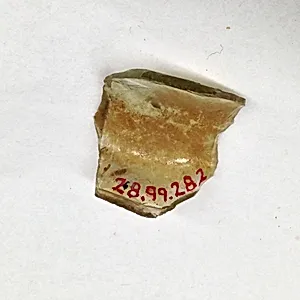
Fragment
Unknown Artist
ca. 1150–ca. 1250
Medium
Glass, ceramic
Dimensions
L. 1 1/8 in. (2.9 cm)
Classification
Glass-Vessels
Culture
European or Middle Eastern
Department
Medieval Art
Museum
Metropolitan Museum of Art, New York, NY
Credit
Gift of Clarence H. Mackay, Archer M. Huntington, Stephen H. P. Pell and Bashford Dean, 1928
Accession Number
28.99.282
Rights
Public Domain
Art Historical Context
This delicate fragment, dating to around 1150–1250, offers a tantalizing glimpse into medieval craftsmanship from either Europe or the Middle East Measuring just 1 1/8 inches long, it hails from a glass vessel classified within the Metropolitan Museum of Art's Medieval Art department Such small survivals are treasures, often recovered from archaeological sites, revealing the everyday luxuries of the High Middle Ages—a time of vibrant trade routes spanning the Mediterranean during the Crusades. Crafted from glass with possible ceramic elements, the piece exemplifies advanced techniques like glassblowing, which flourished in Islamic workshops and influenced European artisans. These vessels held oils, perfumes, or spices, symbolizing cultural exchange and technological prowess. Their iridescent sheen and fine forms were status symbols, traded far and wide. Generously gifted in 1928 by collectors including Clarence H. Mackay and Bashford Dean, this fragment underscores the detective work of art history: even shards whisper stories of distant hands shaping beauty amid history's tumult. A reminder that the past endures in pieces, large or small.