
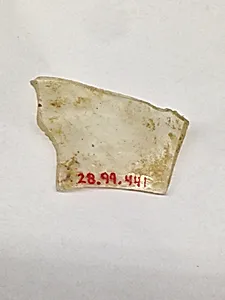
Fragment
Unknown Artist
ca. 1150–ca. 1250
Medium
Glass, ceramic
Dimensions
L. 2 1/8 in. (5.4 cm)
Classification
Glass-Vessels
Culture
European or Middle Eastern
Department
Medieval Art
Museum
Metropolitan Museum of Art, New York, NY
Credit
Gift of Clarence H. Mackay, Archer M. Huntington, Stephen H. P. Pell and Bashford Dean, 1928
Accession Number
28.99.441
Rights
Public Domain
Art Historical Context
This delicate fragment, dating to around 1150–1250, offers a glimpse into medieval craftsmanship from either Europe or the Middle East. Measuring just 2 1/8 inches (5.4 cm) long, it is a remnant of a glass vessel, possibly incorporating ceramic elements, highlighting the era's innovative material combinations. Such small artifacts were often part of everyday tableware, perfume bottles, or luxury items traded along bustling Silk Road routes, blending Eastern and Western influences. During the High Middle Ages, glassmaking flourished in both regions—Islamic artisans in Syria and Egypt perfected free-blown techniques for translucent, iridescent wares, while European workshops experimented with colored glasses amid the Gothic revival. This piece's uncertain provenance underscores the vibrant cultural exchanges of the Crusades and medieval commerce, where vessels like these symbolized status and artistry. Preserved through generous gifts to the Metropolitan Museum of Art in 1928, this unassuming shard invites us to ponder the fragility of history. Though incomplete, it embodies the technical prowess and cross-cultural dialogues that defined a dynamic age, reminding visitors of the stories hidden in even the tiniest relics.