
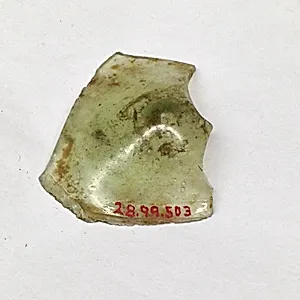
Fragment
Unknown Artist
ca. 1150–ca. 1250
Medium
Glass, ceramic
Dimensions
L. 1 7/8 in. (4.8 cm)
Classification
Glass-Vessels
Culture
European or Middle Eastern
Department
Medieval Art
Museum
Metropolitan Museum of Art, New York, NY
Credit
Gift of Clarence H. Mackay, Archer M. Huntington, Stephen H. P. Pell and Bashford Dean, 1928
Accession Number
28.99.503
Rights
Public Domain
Art Historical Context
This delicate fragment, dating to around 1150–1250, offers a tantalizing glimpse into medieval craftsmanship from either Europe or the Middle East. Measuring just 1 7/8 inches long, it survives from what was likely a small glass vessel, a common luxury item in the bustling trade networks of the High Middle Ages. The era's Crusades and Silk Road exchanges fostered vibrant cultural exchanges, blending Islamic glassmaking prowess—known for its translucent beauty and intricate forms—with European traditions, making such artifacts emblematic of a connected world. Crafted from glass with possible ceramic elements, the piece highlights advanced techniques like glassblowing, which allowed for thin, elegant shapes prized for holding perfumes, oils, or spices. Though incomplete, its preservation speaks to the fragility and value of everyday medieval luxuries, now classified among the Metropolitan Museum of Art's Medieval Art treasures. Donated in 1928 by prominent collectors, it reminds us how fragments like this reconstruct lost histories, inviting us to imagine the hands that once held it.