
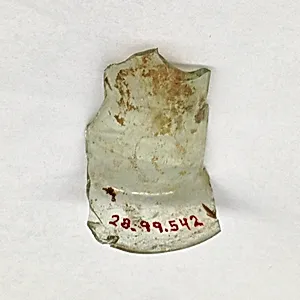
Fragment
Unknown Artist
ca. 1150–ca. 1250
Medium
Glass, ceramic
Dimensions
L. 1 5/8 in. (4.1 cm)
Classification
Glass-Vessels
Culture
European or Middle Eastern
Department
Medieval Art
Museum
Metropolitan Museum of Art, New York, NY
Credit
Gift of Clarence H. Mackay, Archer M. Huntington, Stephen H. P. Pell and Bashford Dean, 1928
Accession Number
28.99.542
Rights
Public Domain
Art Historical Context
This delicate fragment, dating to around 1150–1250, hails from the vibrant medieval world, possibly crafted in Europe or the Middle East. Measuring just 1 5/8 inches long, it once belonged to a glass vesselperhaps a beaker, bottle, or decorative container—highlighting the exquisite craftsmanship of the era. Donated to the Metropolitan Museum of Art 1928 by prominent collectors, it now resides in the Medieval Art department, offering a tangible glimpse into daily life and luxury goods of the 12th–13th centuries. Glassmaking during this period was a sophisticated art, blending techniques like blowing, molding, and possibly ceramic inlays for added durability or decoration. In the Islamic world and Byzantine Europe, such vessels were prized for their translucency and vibrant colors, often traded along Silk Road routes. This fragment's uncertain origins underscore the cultural exchanges between East and West, where innovations in silica-based glass influenced everything from ecclesiastical chalices to tableware. Though small, it speaks volumes about medieval ingenuity: artisans transformed humble sand and ash into shimmering objects symbolizing wealth and refinement. Visitors, imagine sipping from a similar piece amid a bustling market or noble feast— a reminder of how fragile beauty endures through time.