
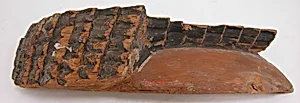
Fragment from the head of a statue
Unknown Artist
ca. 2381–2323 B.C.
Medium
Coniferous wood (Cedar), black paint
Dimensions
H. 21.1 cm (8 5/16 in.)
Classification
Head fragment, Perneb
Period
Old Kingdom
Department
Egyptian Art
Museum
Metropolitan Museum of Art, New York, NY
Credit
Gift of Edward S. Harkness, 1914
Accession Number
14.7.106
Rights
Public Domain
Art Historical Context
This delicate fragment, hailing from Egypt's Old Kingdom during Dynasty 5 (ca. 2381–2323 B.C.), captures part of a statue's head crafted by an unknown artist. Standing just 21.1 cm tall, it offers a tantalizing glimpse into the monumental world of ancient Egyptian sculpture, likely from a tomb or temple context where such figures served funerary or protective roles. The Old Kingdom marked an era of unparalleled stability and architectural grandeur, with pharaohs like those of Dynasty 5 commissioning pyramids and sun temples that reflected their divine power. Carved from imported coniferous cedar wood—a luxurious material sourced from Lebanon and reserved for elite works—the fragment showcases masterful woodworking techniques. Its surface bears traces of black paint, probably symbolizing dark, fertile Nile soil or the eternal skin of the afterlife, applied with precision to enhance realism and symbolism. Though incomplete, the smooth contours and detailed modeling hint at the lifelike style of Old Kingdom statuary, designed to house the ka (spirit) eternally. Today, this treasured piece resides in the Metropolitan Museum of Art's Egyptian Art Department, a gift from Edward S. Harkness in 1914. It reminds us how fragile yet enduring ancient artistry is, bridging us to a civilization obsessed with immortality.