
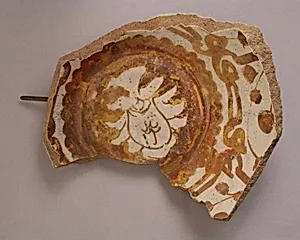
Fragment of a Bowl
Unknown Artist
11th–12th century
Medium
Earthenware; luster-painted
Classification
Ceramics
Department
Islamic Art
Museum
Metropolitan Museum of Art, New York, NY
Credit
Rogers Fund, 1907
Accession Number
07.238.38
Rights
Public Domain
Art Historical Context
This exquisite fragment of a bowl, crafted in the 11th–12th century, hails from the vibrant world of Islamic ceramics. Produced by an unknown artist, it exemplifies the technical mastery of earthenware vessels during a golden era of Islamic art, when potters across regions like Iraq, Persia, and Spain created luxurious tableware for both daily use and elite patrons. Though only a piece survives, its presence in the Metropolitan Museum of Art's Islamic Art department—acquired through the Rogers Fund in 1907—offers a tantalizing glimpse into medieval craftsmanship. The standout feature is its luster-painted surface, a sophisticated technique where metallic oxides were applied over a glazed base and fired in a reducing atmosphere to produce an iridescent, shimmering effect mimicking gold or silver. Invented in the 9th century and perfected by the 11th, lusterware symbolized innovation and opulence in Islamic culture, blending functionality with artistic splendor. This method required immense skill, as the luster could easily fade or crack during firing. As a testament to the Islamic world's contributions to decorative arts, this fragment highlights how ceramics bridged utility and beauty, influencing later European traditions. Visitors can appreciate how such pieces illuminated homes and courts, reflecting a society's love for color, pattern, and light.